local real estate SEO: how to dominate your city and become the benchmark in your sector, whether you are an independent agent, a network, or a neighborhood agency.
Understanding the challenge: compete on streets, not across all of Google
On the web, your competitors are not only the other agencies on your street, but all those targeting the same neighborhoods as you. Yet the game is won at a very precise scale: city names, districts, neighborhoods, sometimes even streets. Your goal is not to rank well on Google , but to capture every local search related to your area:
apartment for sale + your city , real estate agency + your neighborhood , home valuation + your municipality , etc.
The good news: many agencies settle for a basic brochure website, without a local strategy. With a structured approach and a few regular actions, you can outrank them sustainably.
Site architecture: organize your pages like your territory
The biggest concrete lever to dominate your city is how you structure your site. It must precisely reflect the geography of your business.
Create dedicated pages by city, neighborhood, and type of service

Don’t settle for a single Our services page. Create targeted pages:
– One page per city / municipality you work in (e.g.: Real estate agency in Lyon 3 , Real estate in Saint-Maur-des-Fossés ).
– Neighborhood pages for the key areas (e.g.: Real estate Croix-Rousse , Buy an apartment Le Marais ).
– Pages by strong intent: valuation, buying, selling, property management, investment.
Each page must speak like a local sales rep: mention well-known streets, transit, schools, amenities, typical property types, average prices, and the client profiles you support.
Landing pages that convert, not just rank
The goal isn’t only to bring traffic to your local pages: you need to turn those visits into calls, forms, or valuation requests. Think of your pages as true landing pages: clear messaging, social proof, a visible form, repeated calls to action. To go further in this optimization work, take inspiration from these tips for designing a high-performing real estate landing page tailored to your area.
Google Business Profile: your #1 local storefront
In real estate, a huge share of leads comes from the local pack (the three results with a map that appear at the top of Google). Dominating these positions above all requires a flawless Google Business Profile (GBP) listing.
Optimize your listing in depth
Think of your listing as a mini web page:
– Ultra-precise primary category (e.g. Real estate agency or Real estate valuation expert if that’s your core business).
– Consistent secondary categories (property management, rentals, etc.).
– Establishment name: stay true to reality and signage (avoid keyword stuffing, which is penalizing in the long run).
– Exact address, local phone number, updated hours.
– Description written like a sales pitch targeted to your area.
– Regularly add photos and posts (new properties, successes, local tips).
Take advantage of an analysis of your current site
Dominate through reviews and reputation
Google reviews are a major factor in visibility AND conversion. The more recent, detailed, highly rated reviews you have, the more credibility you gain. Set up a simple process at every transaction (sale, rental, valuation) to request a personalized review. To understand in more depth how these testimonials influence your visibility and your leads, rely on this resource dedicated to the strategic role of customer reviews for an agency.
Geo-targeted content: become your city’s media outlet
An agency that dominates locally is the one that knows its territory better than the others… and shows it. Your blog and content pages must focus on your catchment area, not on generic advice that applies everywhere.
Content that answers real local questions
A few examples of powerful topics:
– Where to buy an apartment for less than X €\/m² in [City]?
– The best neighborhoods to invest in [City] in 2025
– Price per m² in [City]: analysis by neighborhood
– How to successfully sell your house in [City] in X weeks
– Seasonal rentals: what the city hall of [City] allows
Each piece of content must cite places, local stakeholders, urban projects, infrastructure. The more specific you are, the more Google identifies you as a reference in that specific area.
Structuring content to be understood by Google
On each page:
– A clear title with the city / neighborhood.
– Subheadings organized by subtopic (property types, buyer profiles, practical advice).
– Structured lists (benefits by neighborhood, mistakes to avoid, selling steps, etc.).
– A box or paragraph for valuation / getting in touch directly linked to the area.
You can also draw inspiration from specialized resources, like this complete guide devoted to local real estate strategies which details many additional levers.
Strong local signal: photos, videos, virtual tours
Google increasingly relies on visual and behavioral signals. Offering quality media brings a double benefit: more clicks and time spent on your site (better SEO) and more conversions (more calls, forms, visits).
Polish your photos for visibility and trust
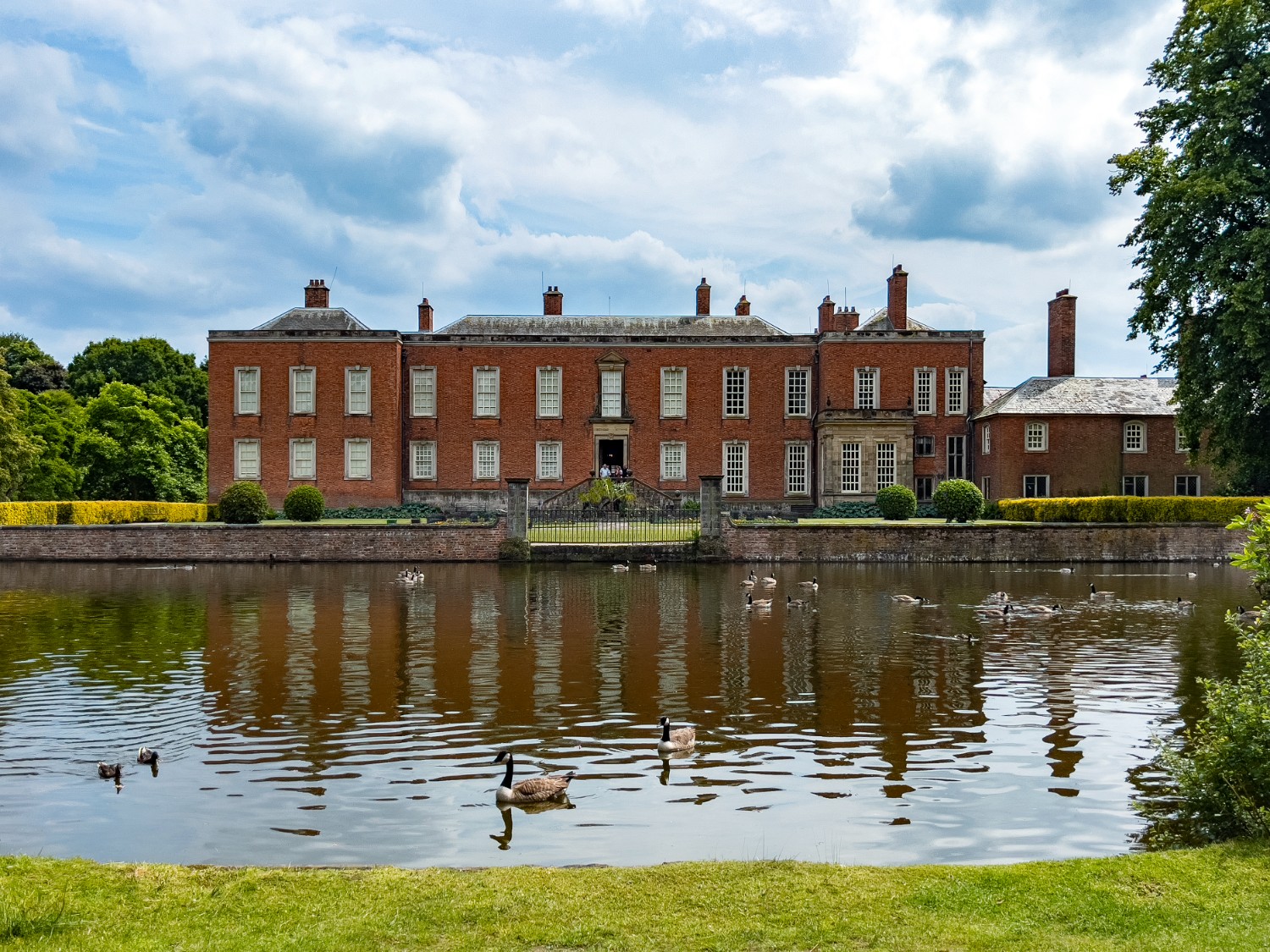
Mediocre photos hurt your image and your performance. They lower the click-through rate on your listings and on your Google listing, and reduce the time spent on your site. Conversely, attractive visuals encourage users to explore your local pages and listings more. To understand exactly how visual quality influences your online presence, see these explanations on the impact of real estate photos on SEO.
Video and virtual tours: advanced weapons of local SEO
Immersive formats create far higher engagement than simple texts or images. By integrating into your local pages videos presenting neighborhoods, properties, or tips, you increase time spent on the site and your differentiation versus competing agencies. To go further, you can set up videos dedicated to your listings and your agency; this guide shows how real estate video often helps sell faster.
Virtual tours strengthen this approach even further: they show your professionalism, attract remote buyers, and generate a real advantage in the eyes of sellers comparing agencies. A comprehensive article details the benefits of virtual tours for professionals : beyond marketing, it’s also a strong quality signal for Google.
Local backlinks and citations: proving you truly exist locally
For good local SEO, Google must be sure that you are firmly anchored in the area you target. Two major levers: citations and inbound links.
NAP consistency across all directories
NAP (Name, Address, Phone): your name, address, and phone number must be identical everywhere: website, Google listing, portals, directories, social networks. The slightest variation (street spelling, adding an address line, different centralized number) can create doubts for Google.
List your agency and your business on:
– Local professional directories (Chamber of Commerce, merchants’ associations, business clubs).
– Reliable general directories (according to your country priorities).
– Review sites and real estate portals (with a well-completed agency profile).
Get local backlinks
Links from local sites (even non-real-estate ones) carry particular weight for your neighborhood visibility:
– Partnerships with local tradespeople, notaries, brokers, architects: visibility swaps, interviews, guest posts.
– Participation in local events (trade shows, conferences, sponsoring sports or cultural events) with a mention and link on the official websites.
– Collaborations with neighborhood blogs or media that feature your analysis of the local real estate market.
Take advantage of an analysis of your current site
To inspire your strategy, you can consult these different approaches to local SEO strategies applied to real estate, which show how to combine content, links, and proximity signals.
Leverage behavioral signals: time on site, click-through rate, engagement
Google observes how users interact with your results:
– Do they click on you more than your competitors?
– Do visitors stay on your pages or leave right away?
– Do they interact with your photos, videos, forms, maps?
Work on your snippets in search results
To increase your local click-through rate (CTR):
– Titles that include the city or neighborhood, but also a strong promise ( free valuation within 24h , specialist in family homes , etc.).
– Benefit-oriented meta descriptions, not just descriptive: numbers, proof, differentiation.
– Structured data markup (schema.org) for agencies, reviews, properties (when possible) to enrich your snippets.
Optimize the mobile experience
A large portion of local searches are done on smartphones, often on the go. Your site must therefore:
– Load very fast, even with an average connection.
– Display a clear and persistent phone call button.
– Offer simple navigation to pages by city or neighborhood.
– Provide short forms that are easy to use on a small screen.
Tracking, prioritization and ongoing adjustments
Dominating your city doesn’t happen in a month, but throughout the year. It is crucial to measure regularly:
– The local queries that trigger your impressions (in Google Search Console).
– Positions for your keywords by city / neighborhood (via a localized rank tracking tool).
– The number of calls, forms, valuation requests coming from the site and the Google Business Profile.
– The evolution of your reviews and their frequency.

Identify priority areas and services
You don’t need to be #1 everywhere for the strategy to be profitable. Focus your efforts on:
– The cities/neighborhoods where your best listings or highest margins are located.
– The services where your agency has a real advantage (sales, expertise, specialization).
– Segments still underexploited by your competitors (rental investment, expatriates, seniors, etc.).
It’s by prioritizing areas and intents (valuation, selling, buying, property management) that you’ll get the most out of your efforts, rather than trying to target the entire department uniformly.
Complete your strategy with specialized resources
Local SEO applied to real estate has its own particularities (listings, mandates, portals, seller/buyer relationship). It is therefore useful to rely on resources that speak specifically to your profession:
– Analyses such as this article on optimizing local visibility for real estate activities to refine your roadmap.
– Field-oriented content, such as these practical tips to boost your local presence published in an industry media outlet.
– Case studies that highlight why local SEO has become essential for agencies in the face of competition from national portals and networks.
These resources help you benchmark your current strategy against best practices and identify levers you’re not yet using (local campaigns, thematic content, partnerships, etc.).
Implement a concrete 90-day action plan
To move from theory to practice, structure a step-by-step plan over three months, with realistic goals:
Month 1: foundations and minimum visibility
– Audit of your current situation: existing pages, Google Business Profile, reviews, backlinks, local content.
– Full update of your Google Business Profile (info, description, photos, posts).
– Standardization of your NAP across the main directories and portals where you are already present.
– Creation or optimization of 2 to 3 key pages: your main city + a priority service (e.g., valuation + purchase).
Month 2: local content and proof of proximity
– Creation of 3 to 5 blog posts or satellite pages on strong local themes (price per m², neighborhoods, tips for selling in [City], etc.).
– Highlighting professional photos on local pages and your Google listing.
– Integration of at least one video or virtual tour on a priority page.
– Launch of a systematic process for collecting reviews after each assignment.
Take advantage of an analysis of your current site
Month 3: local authority and adjustments
– Research of 3 to 5 local partnerships to obtain links (businesses, associations, events).
– Adjustment of titles and descriptions based on click data observed in Search Console.
– Mobile optimization (speed, clarity of call buttons and forms).
– Full review: evolution of rankings, local traffic, and inbound leads.
Accelerate with an external specialized perspective
Implementing all these actions on your own is possible, but it takes time, method, and a clear vision of priorities. An external perspective, specialized in real estate, can save you several months by avoiding classic mistakes (poor geographic targeting, content that’s too generic, poorly designed technical structure, etc.). To find out where you really stand and prioritize the most profitable workstreams, you can benefit from a detailed analysis of your agency website and your local signals.
Dominating your city isn’t a matter of SEO magic, but of consistency between your on-the-ground reality (your knowledge of neighborhoods, your listings, your reputation) and what Google perceives about you. By structuring your site by areas, fully leveraging your Google Business Profile, producing locally grounded content, and cultivating a strong visual and relationship presence, you turn your agency into a true digital reference in your sector. And in a market where sellers now compare agencies online before walking through a door, this local dominance becomes a decisive competitive advantage.





 Français
 English
 Español
 Italiano